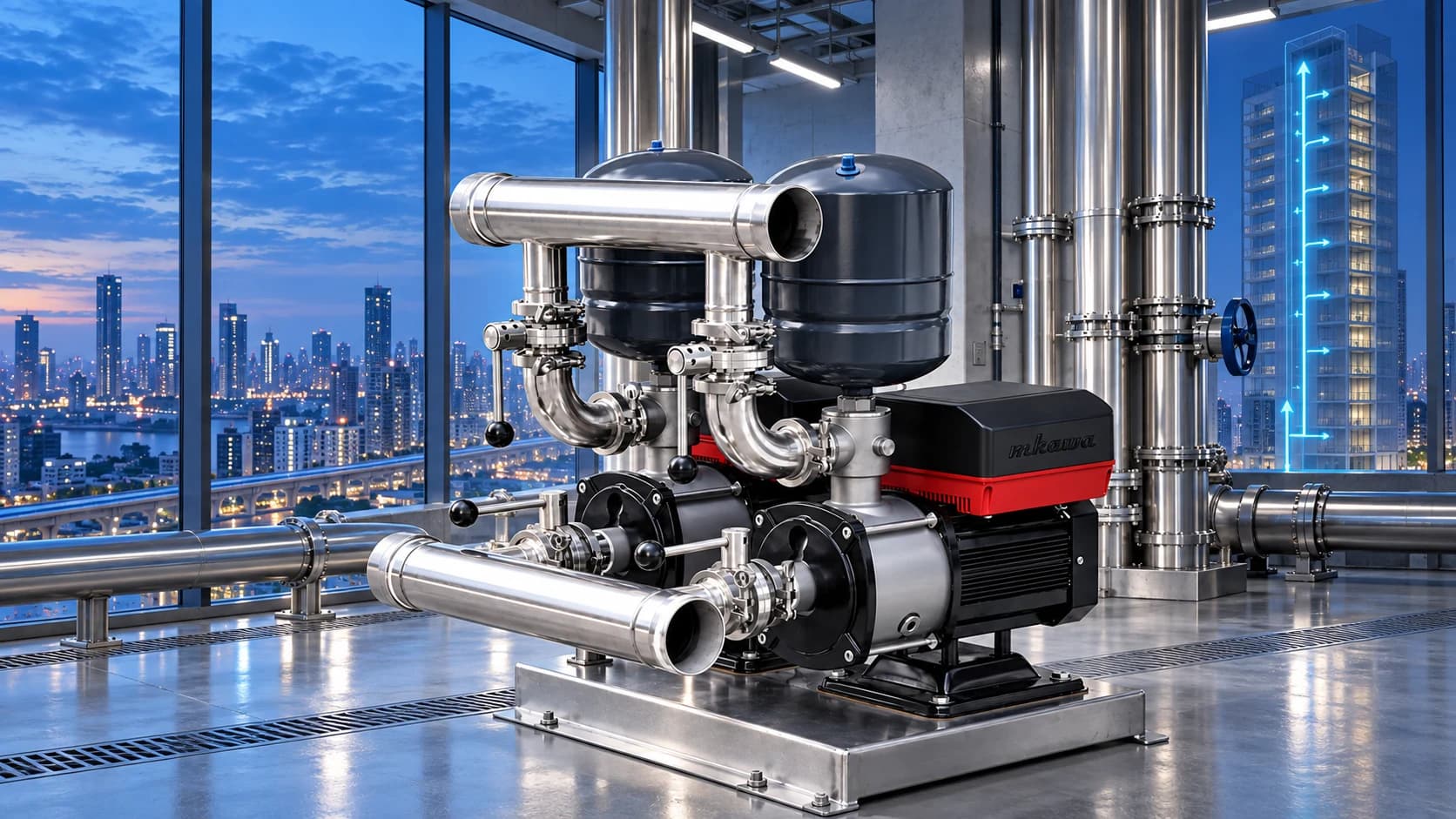

High-Rise Water Pressure Systems: A Builder's Guide
Mkawa Engineering India
Building Services Team
Why one pressure zone is rarely enough
As elevation increases, a pump needs more head to deliver useful pressure upstairs. If one high-pressure set serves the entire tower, lower floors may experience excessive static pressure while upper floors still suffer during peak demand.
Pressure zoning divides the building into manageable vertical sections. Each zone can use a dedicated booster set, break tank or pressure-reducing strategy designed for its own flow and head.
Build the duty point correctly
Required head = elevation + required outlet pressure + pipe and fitting losses − reliable incoming pressure
The incoming-pressure credit must use a defensible minimum, not the best reading recorded on a quiet day. Peak flow should come from the applicable plumbing code and project fixture schedule, with diversity applied by the designer.
Core design decisions
| Decision | Why it matters |
|---|---|
| Pressure-zone boundaries | Protects lower floors and preserves upper-floor service |
| Duty/standby or duty/assist arrangement | Maintains service during maintenance or peak demand |
| Variable-speed sequencing | Matches the number and speed of pumps to demand |
| Pressure-vessel sizing | Controls cycling and stabilises transient demand |
| Sensor location | Determines what pressure the controller actually maintains |
| Pipe velocity and sizing | Affects friction loss, noise and lifecycle energy |
Where energy is lost
High-rise systems waste energy when pumps are oversized, pressure setpoints are unnecessarily high, bypass lines remain open or pressure is generated and then discarded across reducing valves. Poorly selected zone boundaries can compound all four problems.
Variable-speed booster sets can reduce speed during low demand and stage additional pumps only when needed. Efficient motors reduce conversion losses, while good hydraulic selection keeps each operating pump near a useful region of its curve.
Redundancy is an operating strategy
A standby pump is valuable only if controls rotate duty, detect faults and prove that the standby unit can start. For critical buildings, define what happens during sensor failure, drive failure, low tank level and power interruption.
Specify isolation so one pump can be serviced without shutting down the complete zone. Confirm access space, lifting provisions, drainage and ventilation in the plant room.
Information a supplier needs
- Floor and zone elevations
- Fixture loading and calculated demand by zone
- Storage-tank levels and reliable inlet conditions
- Required residual pressure at the critical outlet
- Pipe material, length, diameter and major fittings
- Electrical supply, redundancy philosophy and operating schedule
Select a system, not a maximum figure
Never select a high-rise booster from floor count or “maximum head” alone. The complete pump curve, motor input, staging logic, vessel and protection strategy need to work together at minimum, normal and peak demand.
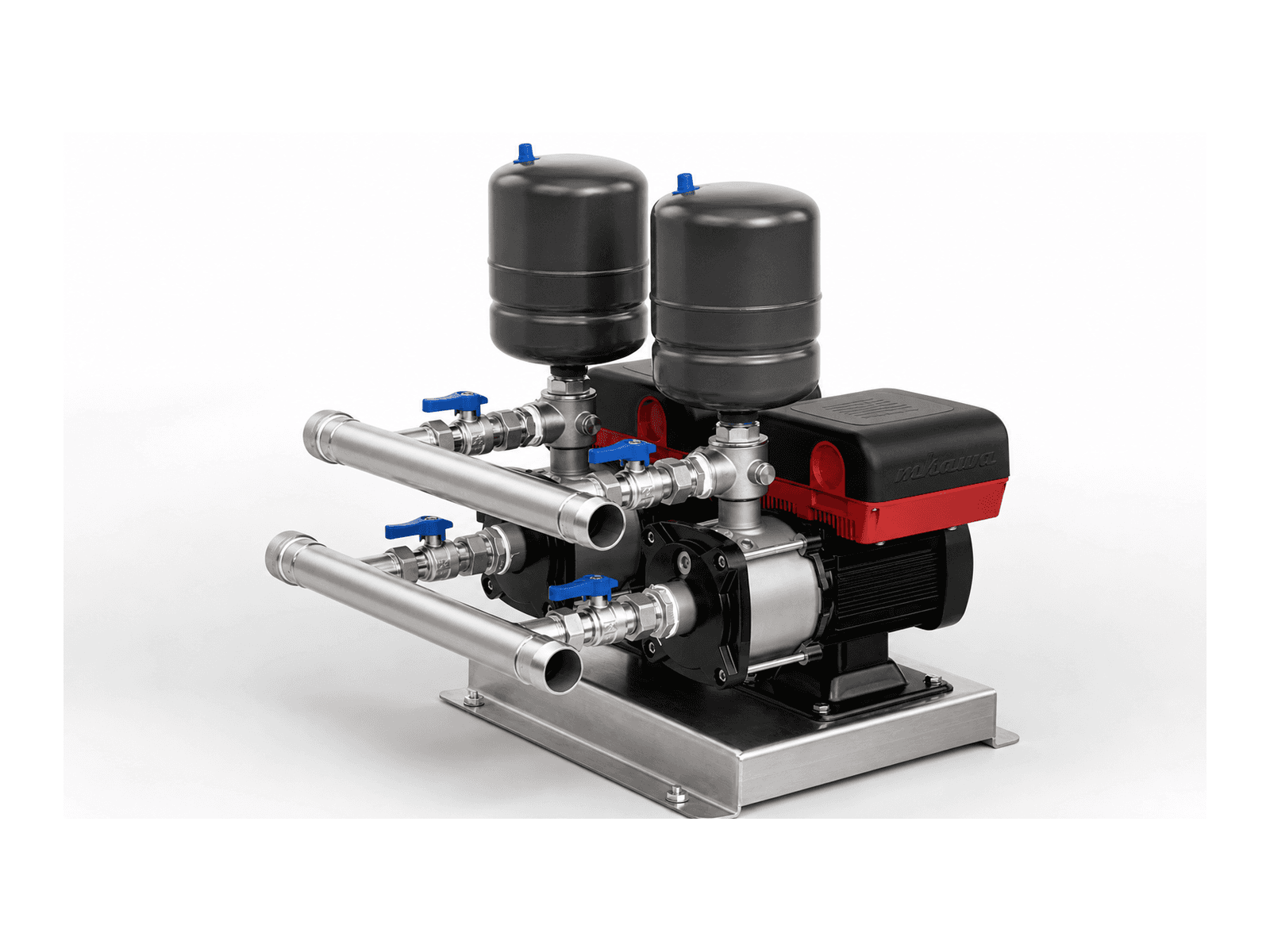
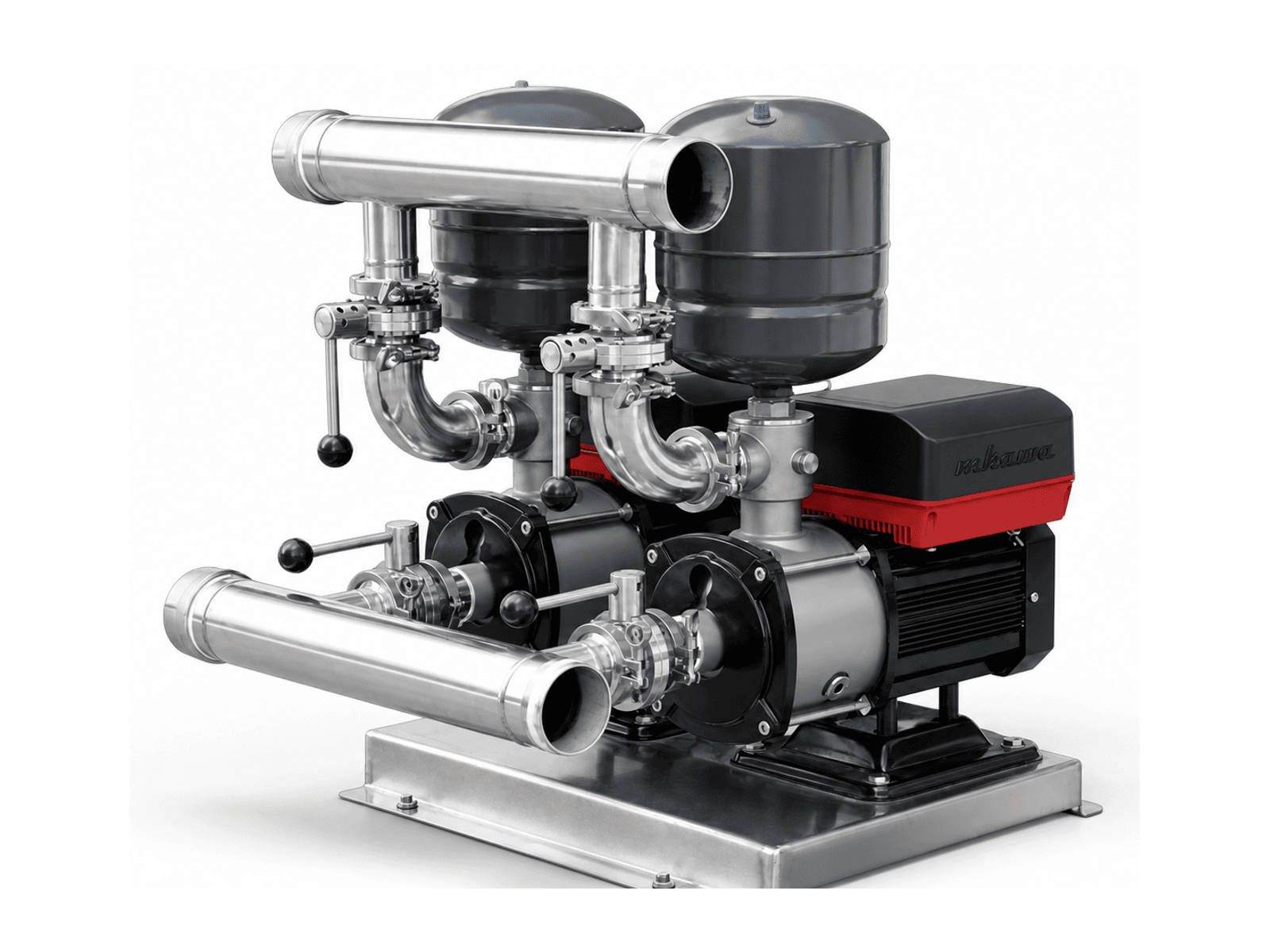
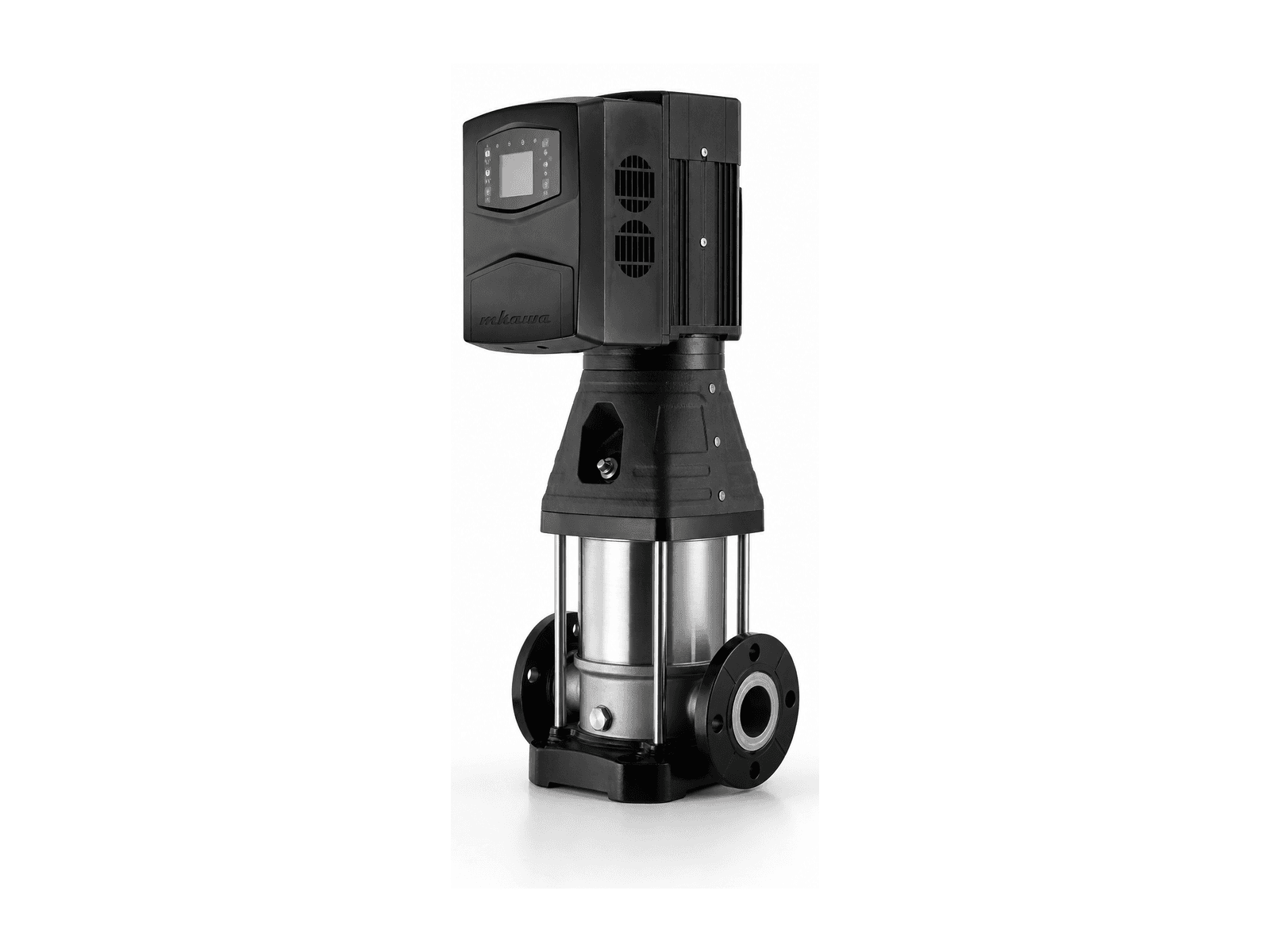
Discuss a building water-pressure system with Mkawa or explore booster and multistage pump options.
Tags
RELATED PRODUCTS
Need the Right Pump for Your Project
Share your duty point, operating hours and site conditions. Our engineering team will help identify a suitable permanent-magnet or variable-speed pumping solution.
Q + H
Duty Point
kWh
Energy View
VFD
Control Review
TCO
Lifecycle View